
What are body-based approaches in psychotherapy?

What Are Body-Based Approaches in Psychotherapy?
In recent years, there’s been a growing shift in psychotherapy to consider the importance our bodies have in understanding and managing our emotional experiences. While traditional talk therapy focuses on thoughts, beliefs, and insight, body-based (or somatic) therapies recognize something important:
Our emotional experiences don’t just live in our thoughts—they live in our bodies, too.
Understanding Body-Based Therapy
Body-based psychotherapy, often called somatic therapy, is a broad category of approaches that focus on the connection between the mind and body. These approaches work with physical sensations, movement, and nervous system responses as pathways to healing.
Think about it this way:
That tightness in your chest before you cry
The lump in your throat during a difficult conversation
The way your shoulders tense when you’re stressed
These aren’t random physical reactions—they’re your body expressing emotion. And this happens before we are even conscious of any thoughts we feel about our emotional experience.
In fact, many experiences are felt in the body first, and only afterward do we make sense of them cognitively. Body-based therapy helps us slow down enough to notice and work with these sensations directly.
Why the Body Matters in Therapy
Traditional (top-down) therapies often begin with thoughts and work toward emotions. It believes that our thoughts always exist before our emotions, however better understandings of how our nervous system work have helped us to learn that cognitive thoughts always come after our body has responded with emotion.
Body-based (bottom-up) approaches do the opposite:
They begin with what’s happening in the body and use that as a gateway to emotional processing. It believes that focusing on emotion and nervous system dysregulation first before considering our thoughts can help a person learn how to regulate their emotions.
This can be especially helpful because:
Stress and trauma are often stored physically (as tension, pain, or activation)
The nervous system plays a key role in how we experience safety, threat, and connection
Some experiences are difficult to put into words or might feel they exist beyond our thoughts (or maybe feel they don’t match our thoughts about a situation)
By including the body, therapy becomes more holistic—supporting both emotional insight and nervous system regulation.
What Is the “Felt Sense”?
A core concept in body-based therapy is the felt sense.
This refers to the internal, physical experience of being in your body—things like:
Sensations (tight, heavy, warm, buzzing)
Movement impulses (wanting to pull away, curl up, or reach out)
Shifts in breathing, posture, or tension
Rather than analyzing these sensations, therapy invites you to notice, track, and gently explore them.
Over time, this builds a deeper awareness of how your body responds to different emotions and experiences.
What Is Somatic Experiencing?
One well-known body-based approach is Somatic Experiencing (SE).
Somatic Experiencing focuses on how the nervous system responds to stress and threat—particularly through survival responses like:
Fight
Flight
Freeze
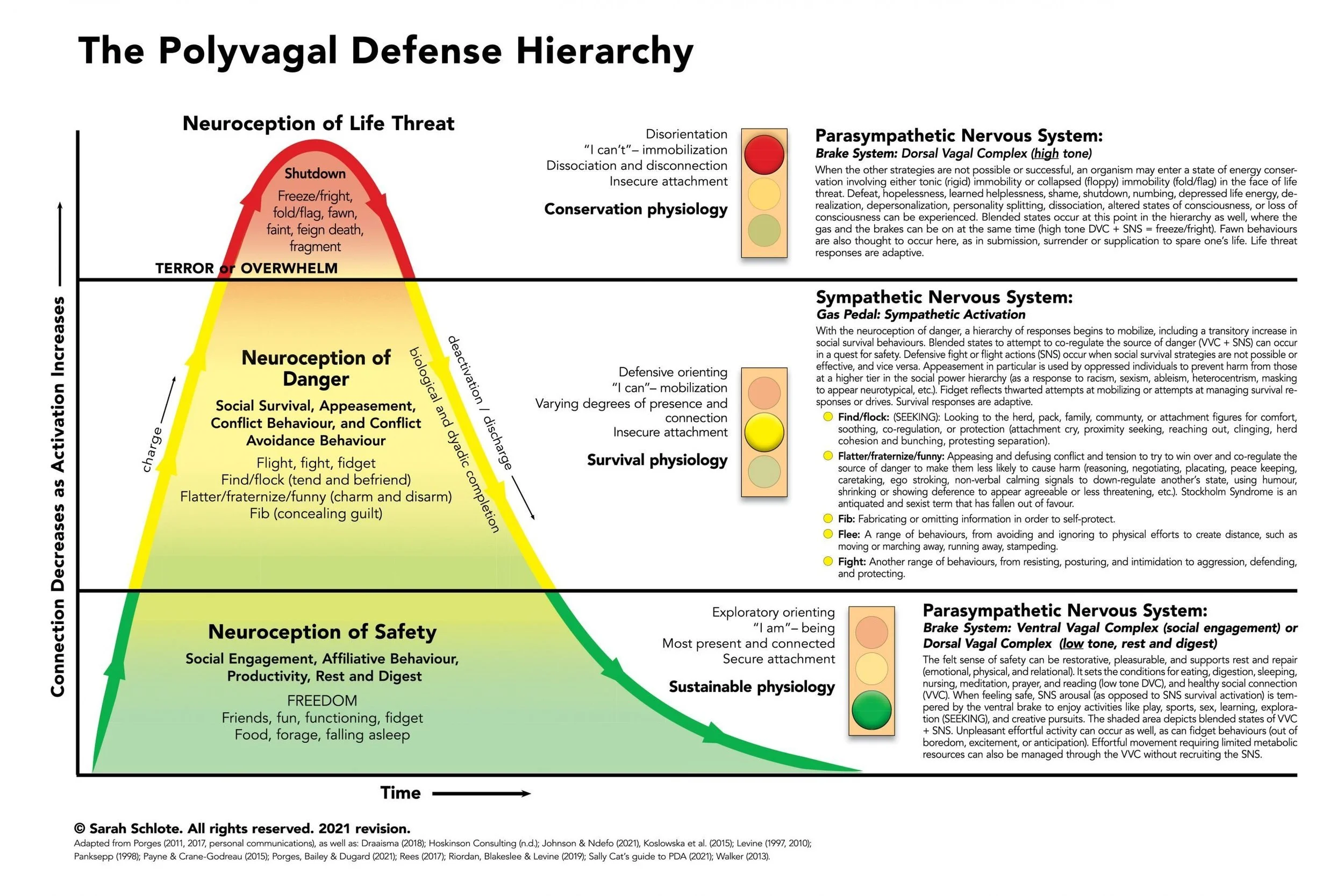
These responses are natural and protective. However, sometimes the body can get “stuck” in these patterns, leading to ongoing feelings like anxiety, overwhelm, irritability, or shutdown.
Somatic Experiencing works by helping the nervous system gradually return to a state of balance.
Instead of diving directly into overwhelming experiences, this approach:
Tracks small shifts in body sensations
Moves slowly between activation and safety
Builds awareness of what “feels safe” in the body
Supports the release of stored tension and stress
This gentle, gradual process helps increase the body’s capacity to regulate itself over time.
What Does This Look Like in a Session?
Body-based therapy can feel quite different from traditional talk therapy—but it’s often subtle and collaborative.
A session might include:
Noticing what’s happening in your body as you talk
Pausing to track a sensation (e.g., “What do you notice in your chest right now?”)
Using breath, grounding, or small movements
Gently shifting attention between discomfort and safety
Importantly, this work happens at your pace. You are never pushed to go further than what feels manageable.
Is Body-Based Therapy Only for Trauma?
While body-based approaches are commonly used in trauma work, they’re not limited to it.
They can be helpful for:
Anxiety and chronic stress
Emotional overwhelm
Feeling “stuck” or disconnected
Difficulty identifying or expressing emotions
Building self-awareness and regulation
Because all emotions have a physical component, working with the body can support a wide range of concerns.
A Different Way of Understanding Healing
Body-based therapy offers a shift in perspective:
Instead of asking “What’s wrong with me?”
it invites the question:
“What is my body trying to tell me?”
By learning to listen to the body—and respond with curiosity rather than judgment—we can access deeper, more sustainable change.
Final Thoughts
You don’t have to choose between talk therapy and body-based therapy. In fact, many therapists integrate both.
Insight helps us understand our experiences. The body helps us process them.
And when both are included, therapy can become a more complete and grounded path toward healing.
What is SOMATIC EXPERIENCING in Trauma Therapy? https://www.youtube.com/watch?v=aDYRkLAAH2U